Melbourne’s fuel prices have climbed sharply in recent years, and the used-car market has shifted in response. Buyers who previously filtered for performance or space are now filtering for economy — and many are making that switch for the first time, buying a hybrid they’ve never owned before.
That’s a significant change in buying behaviour, and it comes with risks most buyers aren’t fully aware of. Hybrids and plug-in hybrids have additional mechanical and electrical systems that a standard RWC simply doesn’t assess. If you’re considering a used hybrid or EV in Melbourne in 2026, knowing what to check — and how to check it — is the difference between a smart buy and an expensive mistake.
What Are Melburnians Actually Paying at the Pump in 2026?
Melbourne pump prices for unleaded petrol have been volatile but consistently elevated, with the average price regularly sitting above $2.00/litre at the higher end of the cycle. For a driver covering 15,000 km per year in a V6 (roughly 11L/100km), that translates to approximately $3,300 per year in fuel costs. A comparable hybrid using 5–6L/100km cuts that figure nearly in half.
That saving adds up fast — and it’s reshaping what Melburnians consider ‘worth buying’ in the used market. The shift is not just anecdotal. Dealers across Melbourne’s south-east and inner suburbs report that hybrid and EV stock is moving significantly faster than comparable petrol vehicles.
How Has Buyer Behaviour Shifted — From V8 to Hybrid to EV?
Three years ago, a V8 SUV was a reasonably common purchase for Melbourne families needing towing capacity or space. Today, buyers in that same bracket are asking about plug-in hybrids with towing ratings, or full EVs if their driving is mostly urban. The shift has happened across all age groups and income brackets.
Three distinct buyer profiles are emerging in Melbourne’s current used-car market:
- The pragmatic switcher: Buying a used hybrid for the first time, primarily motivated by fuel costs. May have limited experience with how hybrid drivetrains work or wear.
- The early EV adopter: Looking at second-hand EVs as the first generation of stock hits the used market. Highly concerned about battery degradation and range retention.
- The petrol buyer in a high-cost environment: Still considering petrol but now asking harder questions about fuel economy, timing belts, and long-term running costs before committing.
All three groups benefit from a detailed pre-purchase inspection — but the checks required differ significantly depending on the drivetrain.
Is Buying a Used Petrol Car Still Worth It When Fuel Costs Are This High?
Yes — but the calculus has changed. A used petrol vehicle purchased at the right price can still represent excellent value, particularly for buyers who drive shorter distances, have access to cheaper fuel sources, or plan to on-sell within two to three years.
“The question isn’t whether to buy petrol or hybrid. It’s whether the car you’re looking at is genuinely worth what’s being asked — at current running costs.”
The risk in the current market is that sellers know buyers are moving toward hybrids, so petrol vehicles — particularly high-fuel-consumption models — are often priced with motivation to move. That creates opportunity for informed buyers, but also risk for those who don’t look carefully at service history, oil consumption, and drivetrain condition before committing.
A 150,000 km V6 SUV purchased $4,000 below market rate is not necessarily a good deal if it needs a timing chain service, new injectors, and rear differential work in the first 12 months of ownership.
What Do Our Inspection Reports Reveal About Fuel-Related Wear?
After more than 35 years working across Melbourne’s premium vehicle sector — from apprentice through to master technician, service manager, and independent inspector — our reports consistently show patterns worth understanding before you buy.
What We Commonly Find in Used Hybrid & High-Fuel-Use Inspections
|
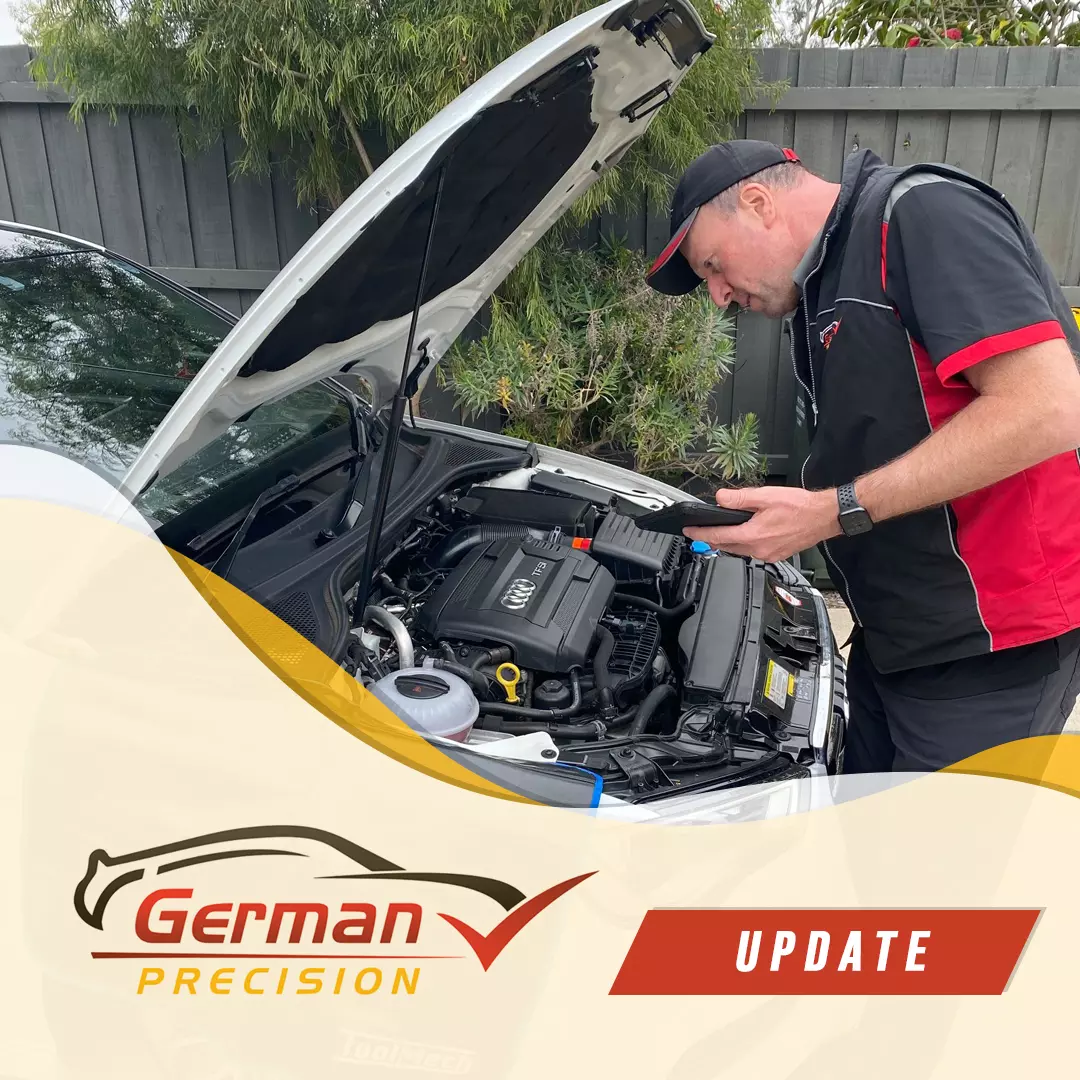
Our written reports average 38–52 pages and include photos of every point of concern. We send the report within an hour of completing the inspection, followed by a phone call to walk you through what we found in plain language.
Why Does an Independent Inspection Matter More in a Fuel-Cost-Driven Market?
When buyers are motivated by running costs rather than the vehicle itself, they are more likely to make faster decisions — and sellers know it. The demand for used hybrids in Melbourne has outpaced supply in several model categories, creating conditions where buyers feel pressure to commit before they’ve done sufficient due diligence.
An independent pre-purchase inspection removes that pressure by giving you objective, documented information about the vehicle’s condition before any money changes hands. We are not connected to the seller, the dealer, or any finance product. Our only obligation is to give you an accurate picture of what you’re buying.
In several cases, our reports have allowed buyers to renegotiate purchase prices — saving hundreds to thousands of dollars based on documented findings — or to walk away from a vehicle that carried significant undisclosed issues. One client recovered their deposit from a dealer after our report identified the vehicle as not roadworthy, which the dealer had initially disputed.
Frequently Asked Questions
Q: Should I buy a used hybrid in Melbourne given current fuel prices?
A: A used hybrid can offer genuine running cost savings in Melbourne’s stop-start traffic. However, the purchase decision should be based on the specific vehicle’s condition, not just the model. Have the hybrid battery, drivetrain, and electronic systems independently inspected before buying — especially if the vehicle has over 80,000 km.
Q: What does a pre-purchase hybrid inspection actually cover?
A: A specialist pre-purchase inspection covers the high-voltage battery system (via electronic fault scanning), the petrol engine, hybrid drivetrain, regenerative braking, suspension, steering, interior, exterior, accident history indicators, and a test drive. It also includes a PPSR check for written-off, stolen, or encumbered status. A standard RWC covers none of the hybrid-specific systems.
Q: How much can I negotiate off a used car price using an inspection report?
A: It varies depending on what the report finds. Minor items — worn tyres, small service items — typically support $300–$800 in negotiation. More significant findings such as suspension work, battery cell imbalance, or undisclosed accident damage can support several thousand dollars in negotiation, or a decision to walk away entirely.
Q: Does a used EV need an inspection before purchase?
A: Yes — arguably more so than a petrol vehicle. The main risk in a used EV is battery degradation, which directly affects real-world range. Without a battery health report from the vehicle’s management system, you have no way of knowing whether an EV will deliver the range stated in its specifications. A specialist inspection can access that data.
Q: Is it worth getting an inspection on a car bought from a dealer rather than a private seller?
A: Yes. Dealer sales are not immune to undisclosed issues, and statutory warranties do not cover every fault. An independent inspection before purchase gives you documentation of the vehicle’s condition at the point of sale — which is valuable if any dispute arises after the purchase is complete.
Q: How long does a pre-purchase inspection take, and how do I get the report?
A: Most inspections take between 1 and 1.5 hours, depending on the vehicle’s condition and complexity. The written report — typically 38 to 52 pages, with photos — is emailed within an hour of completing the inspection. A follow-up phone call to explain the findings is included.
The Bottom Line
Melbourne’s fuel cost environment has changed the used-car market in real terms. Buyers are moving toward hybrids and EVs for legitimate financial reasons — but the hybrid used-car market carries its own risks that standard checklists and RWC certificates do not address.
Whether you’re buying a Toyota Camry Hybrid, a RAV4 Hybrid, a Lexus UX, or reconsidering whether a well-priced petrol vehicle still makes sense for your situation, an independent inspection gives you the information you need to make that call with confidence. German Precision has spent over 35 years working across Melbourne’s premium vehicle sector. We treat every inspection as if it were our own money on the line.